
My sleeping bag clung soggily to my feet as I squinted at the morning after a fitful night. I had woken with a start every couple of hours at the memory of the hike around Devil’s Elbow the day before. In addition to those startled awakenings, I had rolled off my mat several times during the night and hit wet ground, another sure fire way to rouse me from slumber. In the half-light of the tent, I calculated that I had slept about 3 hours, on and off. I checked my mat; it was pretty damp. It must have rained a lot during the night, and without a groundsheet the water had just seeped into the tent. Jo stirred beside me and I rolled over to look at her. From somewhere deep within her sleeping bag, Jo’s muffled voice asked me if I’d felt rain overhead. I began to suggest it might be just the damp from below, but stopped when I spotted the tent sagging right over Jo’s head. Jo stuck her tousled head out of her sleeping bag and stared dolefully at the pool of water that was threatening to split the seams of our tent. A big droplet eased its way through and splattered on top of her sleeping bag, which was wet through. We giggled ourselves awake and stumbled out of the tent to survey the damage. One side of the tent; the side Jo had been sleeping on, was completely soaked. The fire that refused to light the night before had no intention of lighting this morning either…
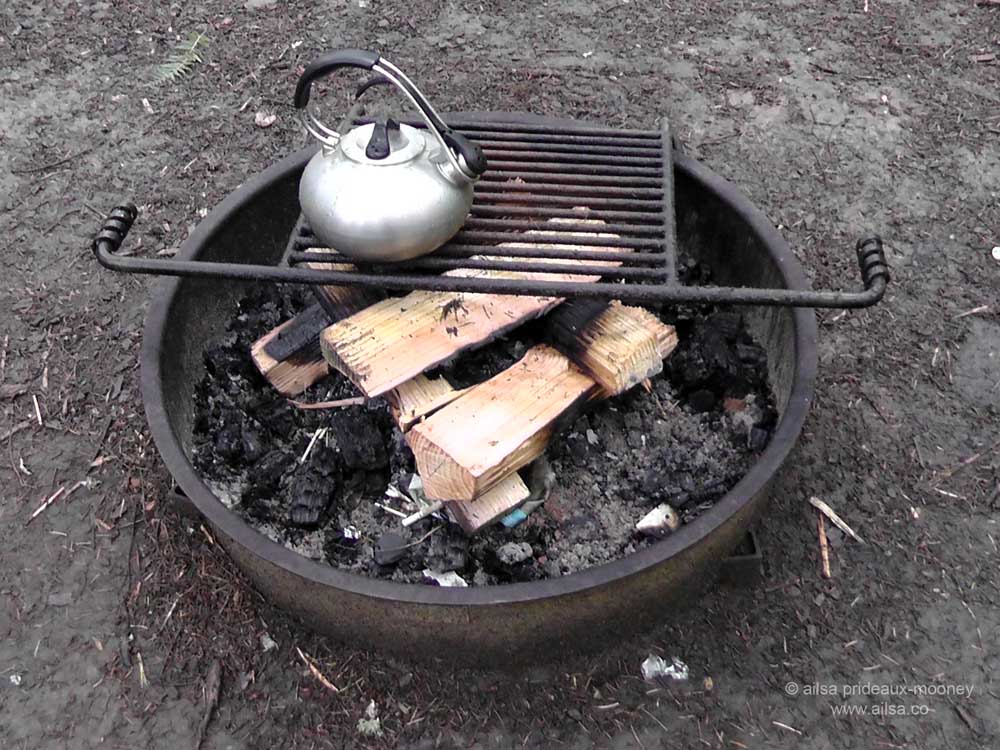
… so we forewent coffee and packed everything back into the car, spreading our sleeping bags on top in the hopes they would dry during the day.
We were off to the south side of Mount St Helens today, popping back onto I-5 south as far as Woodland before turning off to drive along the Lewis River past a trail of lakes and then north on a small logging road towards the volcano. Ape Cave was our first stop; it is one on the longest lava tubes in the United States, formed by an eruption that happened over 1,900 years ago. There is an upper and lower cave; the lower one is easier and shorter and after the previous day’s strenuous hike we both agreed the lower cave was the one we’d explore.
Ape Cave is not named after primates; it got its name from the caving group that discovered it in 1951. The Ape’s Headquarters stands proudly at the top of the trail.

It was drizzling when we got out of the car but the rain began getting heavier along the trail. Thankfully, it was only a short, mossy walk to the mouth of the cave and once we descended into the gloom we didn’t have to worry about the weather. We were too busy trying not to trip. Even though this is the easier of the two caves, the terrain was extremely uneven and there were spots where we had to scramble over rocks, all the while trying to keep hold of our flashlights. The cave is home to brown bats and salamander, but they never once showed themselves. I couldn’t blame them; there was a surprising number of people rambling around underground, happy to be out of the rain.

We followed the lower cave right to the end; a distance of about 0.8 miles which feels a lot longer when you’re in the pitch black and stumbling every couple of feet, but it was definitely worth it, because at the very end the lava tube grows narrower and narrower until you just cannot go any further. It was very Alice in Wonderland; albeit with a lava tube instead of a rabbit hole.

We trekked back the way we came and just as the entrance came into sight I let my guard down and trod in a murky pool of primordial ooze that filled my shoes and left me squelching all the way back up into the daylight.

The rain had stopped but there were puddles aplenty, so I splashed my way through them to get rid of the worst of the cave sludge before we started along the nearby Trail of Two Forests. This is a fascinating interpretive trail of tree-lined boardwalks and volcanic oddities.
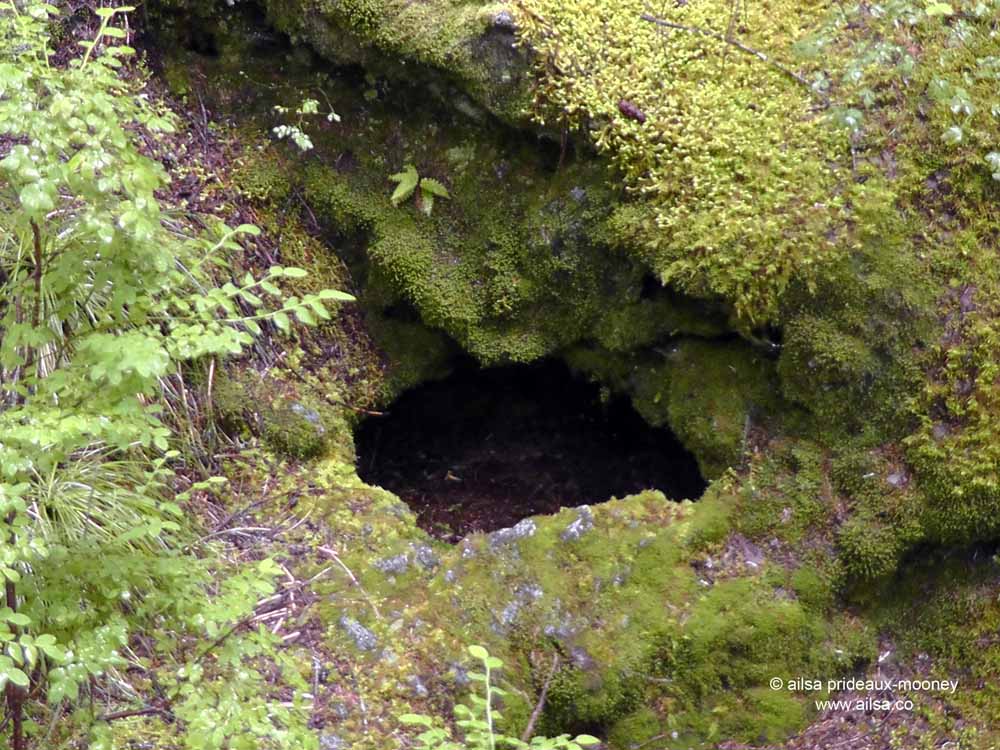
The two forests along the trail couldn’t be more different. The first is the lush forest of today, but further along the trail you encounter the ghosts of trees past. The same eruption that formed the Ape Cave lava tube was responsible for the strange sights you will find here. The lava flow, called pahoehoe, was fluid and slow-moving, which is unusual for volcanoes in the North Cascades – they tend to be more explosive, just as Mount St Helens was in 1980. As the lava cooled, it engulfed this forest and hardened around the trees forming walls of solid rock. The extreme heat caused the trees to burst into flames leaving just charcoal behind. Once the charcoal eroded, all that was left of the forest was a series of hollow tree-trunk shaped molds still bearing the imprint of tree bark.

Just as we reached the end of the trail there was a massive cloudburst so we ran for the car. I took off my cave-gunk-soaked shoes and threw on flip flops and we sat in the car park watching sheets of water stream down the windshield as we lunched on sandwiches, apples and almonds.

Fortified, we decided to venture on, despite the torrential rain which showed no sign of stopping. With the windshield wipers turned on high, Jo steered our little car out of the car park towards our next and final stop at Mount St Helens.
If you’d like to see the inside of a lava tube, check out the short video I made of this part of our trip
xxx Ailsa
(Continued here.)


 Where's my backpack?